How Roulette Variations Reflect Cultural Influences in Swiss Gaming Venues Near Zurich
Riley Keller · Aug 20, 2026

How Roulette Variations Reflect Cultural Influences in Swiss Gaming Venues Near Zurich
Swiss gaming venues near Zurich operate under a regulatory framework established by the Federal Act on Gambling, and roulette tables in these locations typically feature European or French variations rather than the double-zero American style. These choices trace back to Switzerland's geographic position and its historical exchanges with neighboring countries, where gaming traditions developed distinct characteristics over centuries. Data from industry reports indicate that single-zero wheels dominate in Central European establishments, and this pattern holds in Swiss sites because operators align their offerings with regional expectations shaped by French and German practices.
Historical Development of Roulette in Europe
Roulette emerged in 18th-century France and spread across the continent through aristocratic circles before reaching Swiss territories in the 19th century. French roulette introduced rules such as la partage and en prison, which return half the stake on even-money bets when zero appears, and these mechanisms persist in many Swiss venues today. Observers note that the retention of these features stems from cultural proximity to France, where such player protections originated as responses to local gaming customs that valued extended play sessions over rapid house advantages.
German-speaking regions contributed different emphases, including stricter table limits and precise payout structures that reflect administrative traditions in those areas. Venues near Zurich incorporate elements from both traditions, creating hybrid experiences that accommodate multilingual clientele from across the country and beyond.
Key Variations Found in Zurich-Area Casinos
European roulette appears most frequently, with its single zero and standard 2.7 percent house edge, while French roulette adds the aforementioned protective rules that lower the edge to 1.35 percent on even-money wagers. American roulette remains rare in these locations because its double zero increases the edge to 5.26 percent, a configuration that does not align with the measured approach typical of Swiss regulatory oversight. Research indicates that operators select wheel types based on demographic data showing preference for slower, more deliberate game pacing among local and cross-border visitors.
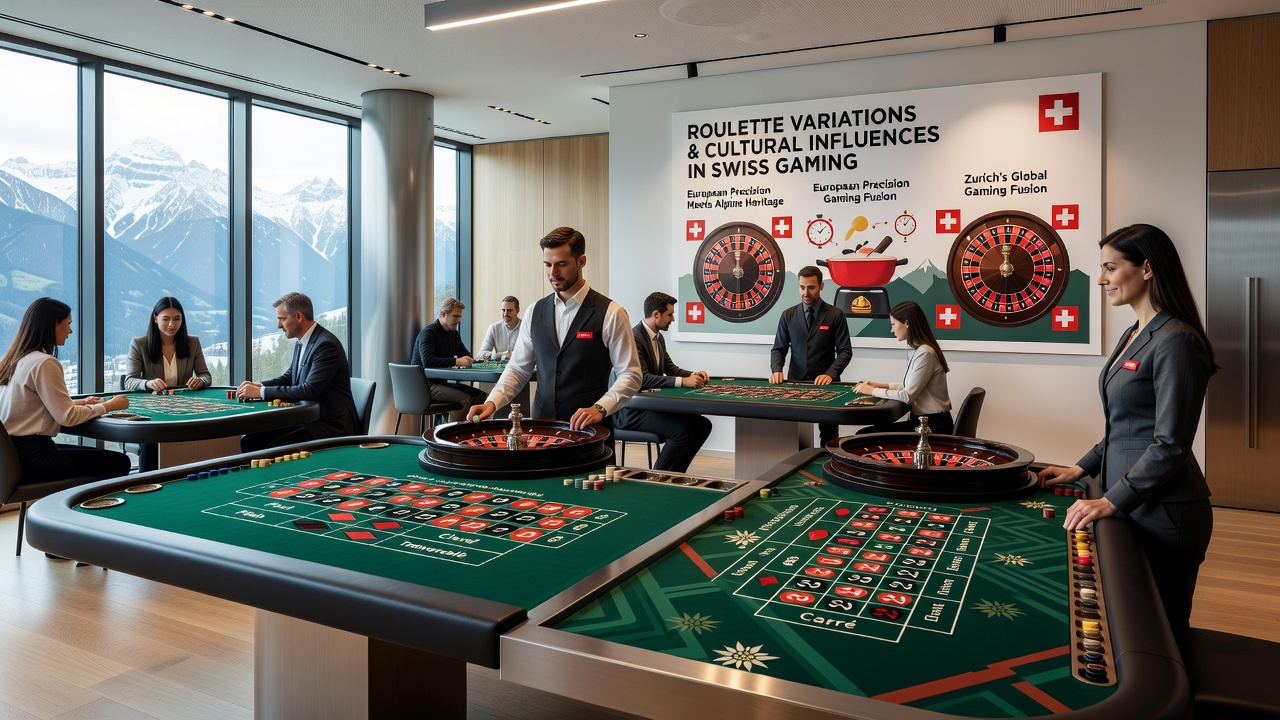
Dealers in these venues often announce outcomes in multiple languages, reflecting Switzerland's own linguistic diversity and the influence of Italian-speaking regions that favor certain betting patterns imported from southern neighbors. Tables may include side bets or call bets drawn from French traditions, such as voisins du zéro or tiers du cylindre, which allow players to wager on specific wheel sectors rather than individual numbers.
Regulatory and Cultural Intersections
The Swiss Federal Gaming Board enforces uniform standards across licensed establishments, yet individual cantons retain authority over operational details that can highlight local preferences. According to figures from the Swiss Federal Gaming Board, roulette remains one of the most requested table games, and venues adapt variations to maintain compliance while meeting visitor expectations shaped by cross-border travel. This flexibility demonstrates how national rules intersect with regional cultural norms without compromising oversight.
Italian cultural influences appear in some betting behaviors observed near the southern cantons, where players favor certain number groupings tied to historical lotteries, though these remain secondary to the core wheel formats. The overall result is a set of offerings that blend precision from German administrative culture, protective rules from French heritage, and measured innovation that fits Swiss governance structures.
Developments Anticipated for August 2026
Industry planning documents reference an upcoming review of gaming regulations scheduled for August 2026, during which authorities will examine player protection measures across all table games including roulette. Preliminary data suggest that discussions may address further standardization of French-style rules in additional venues, building on existing patterns that already reflect cultural adaptations. Those who track these updates note that any adjustments would likely preserve the single-zero foundation while potentially expanding call-bet options drawn from neighboring traditions.
Academic sources such as reports from the International Gaming Institute have documented similar cultural adaptations in other European jurisdictions, providing comparative context that Swiss operators reference when evaluating table configurations. These studies show consistent preference for lower-edge variations in regions with strong historical ties to French gaming practices.
Conclusion
Roulette variations in Swiss gaming venues near Zurich therefore serve as tangible markers of broader cultural exchanges that have shaped the country's gaming landscape over time. The dominance of European and French formats, combined with regulatory oversight that accommodates regional nuances, creates environments where historical influences remain visible in daily operations. As preparations advance toward the 2026 regulatory discussions, these patterns are expected to continue evolving in line with established traditions rather than abrupt shifts.